With trade tensions simmering between the world’s biggest LNG exporter and importer – the US and China, respectively – the role of portfolio players may become even more pivotal, with agile companies standing to make substantial gains.
We view portfolio players as arguably the most consequential group of players in the LNG ecosystem. But how have portfolio players changed the LNG industry? And could they be exacerbating its cycle of boom and bust?
Highlights
- Portfolio players have become arguably the most consequential group of players in the LNG ecosystem accounting for almost half of all contracted LNG volumes announced since the beginning of 2022
- Portfolio players may be overestimating the potential for and sustainability of demand growth
- Geopolitical tensions are creating opportunities for portfolio players to reshape trade flows
- There is one logical endgame: market consolidation. As the portfolio player space is not for small players, nor for the faint-hearted and success requires recognition in the market, a wide portfolio to allow true flexibility and the ability to offer cheap LNG supply
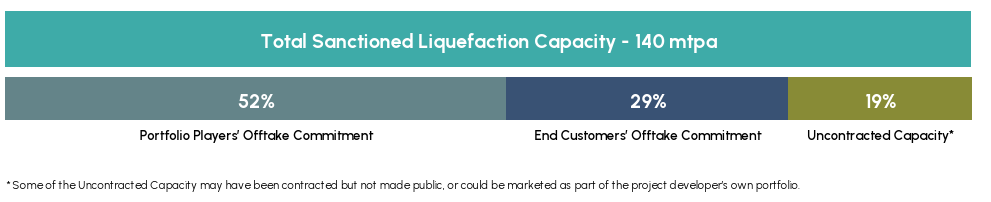
LNG contracts behind new FIDs since 2022 (September 2025)
Source: Gas Strategies
- Some projects like Rio Grande LNG or Port Arther LNG have signed over 60% of their output to portfolio players. Meanwhile small projects like Congo FLNG or Woodfibre LNG, have been 100% underpinned by portfolio players.
- Up to 140 mtpa of new LNG capacity is being directly underpinned not by actual gas end-buyers, but instead by companies with no intrinsic consumption of their own.
- Risks could arise if portfolio players are over-estimating the demand outlook, adding to concerns around market over-supply
Will LNG portfolio players exacerbate the industry’s boom and bust? Find out more by reading our Perspective.