The shipping industry needs to decarbonise, but options are limited. Despite limited current uptake, shipping companies are expected to rely on low-carbon fuels to aid decarbonisation. Methanol is gaining traction as a bunkering fuel due to its low-carbon footprint and ease of transportation and storage.
Based on Gas Strategies’ recent experience supporting clients and drawing on established oil and gas consulting expertise, we explore the complex commercial challenges of producing and marketing methanol, through the lens of the global shipping industry.
Highlights
- The e-methanol market is expected to continue to grow until 2050, however the chicken-and-egg situation between shipping companies and producers requires strong international regulation and government backing to stimulate any large-scale activity.
- There are concerns about the feasibility of mass methanol production, given the cost and amount of energy required. Production is also more likely to occur in areas where renewable energy is cheap, ports are nearby and/or large and biogenic CO2 sources are available.
- Uptake in the market is likely to rise gradually, with blending providing a gateway. Companies are expected to increase demand over time. Regardless of changing political mores and attitudes towards climate goals, companies will still be weighing up the economic costs against the reputational benefits of cutting carbon emissions – even if some of those costs are eventually passed on to consumers.
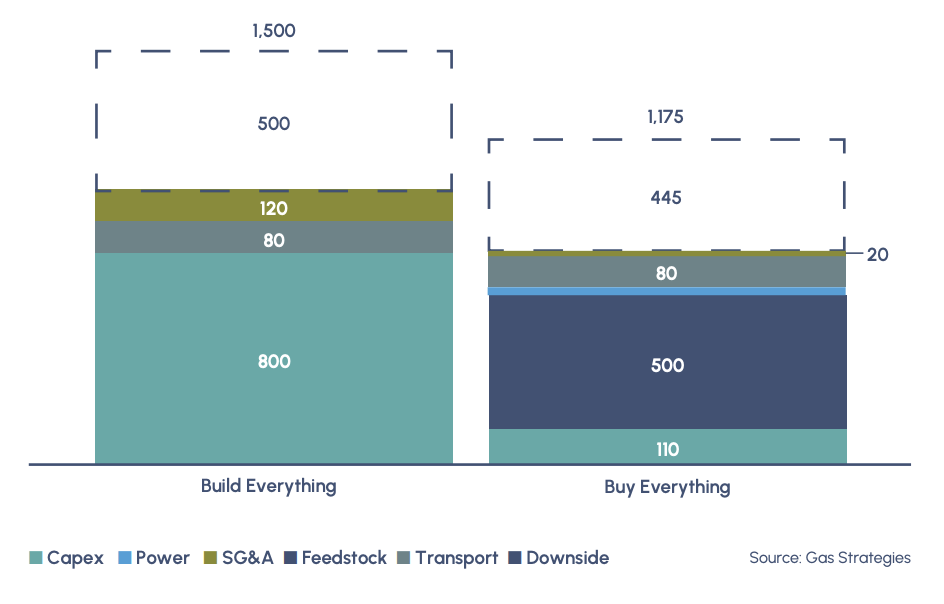
Levelised cost of methanol under different scenarios ($/tonne)
- The figure above shows the levelized cost of methanol over a 25-year operating period for a plant that produces 1000kt/y of methanol
- Buying feedstock can be preferable to building your own feedstock supply, but only commercially viable if companies can enter into advantageous commercial agreements with feedstock suppliers for low cost of hydrogen and CO2
- In both situations, access to competitive project finance is also a necessity for prospective green fuel producers
Download our Viewpoint to learn how to make methanol work for a low-carbon shipping future